Part 5: Why Direction Changes Are One of the Most Defining Skills in Ballroom Dancing
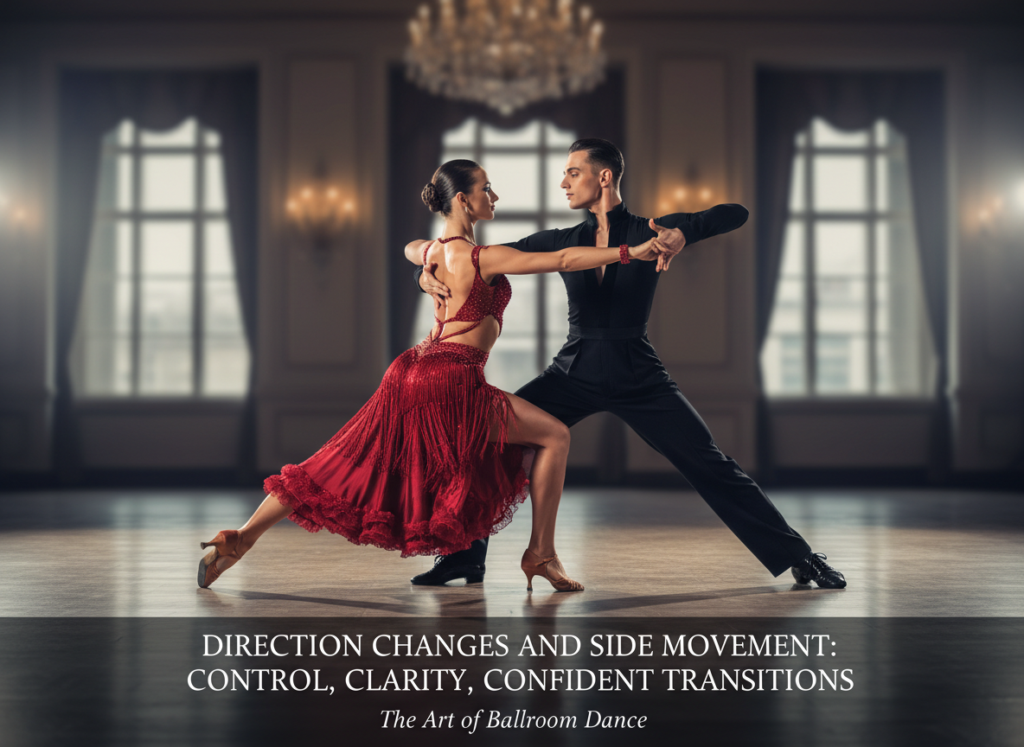
One of the moments when ballroom dancing truly comes alive is during a direction change. A dancer travels forward, shifts sideways, redirects energy, and suddenly the movement feels dynamic and expressive rather than linear. These changes—often subtle to the observer—are what give ballroom dancing its flowing, conversational quality.
Side movement and direction changes are far more than transitional steps. They are the glue that connects forward and backward movement, the preparation for turns, and the mechanism by which dancers navigate space together. Without control in these areas, ballroom dancing can feel stiff, predictable, or disconnected.
Many dancers struggle with direction changes not because they lack coordination, but because these movements demand a higher level of awareness. Direction changes require clarity of intention, complete weight transfer, and strong relationship with the floor. Side movement, in particular, reveals whether a dancer truly understands balance and alignment.
This is why direction changes and side movement deserve focused attention. They expose habits that forward and backward walking can sometimes hide—and refining them dramatically improves overall dancing.
Understanding Direction Changes in Ballroom Dancing
A direction change occurs any time movement shifts from one line of travel to another. This could mean moving forward and then sideways, backward and then forward, or redirecting energy into a new pathway.
In ballroom dancing, direction changes must be intentional and controlled. Abrupt or unclear changes disrupt balance and timing. Smooth direction changes feel planned, even when improvised.
At their core, direction changes depend on two things:
- Clear weight transfer
- Controlled release of energy from one step into the next
When these elements are missing, dancers often feel rushed or pulled off balance. When they are present, direction changes feel natural and confident.
Why Side Movement Is So Challenging for Dancers
Side movement often feels less intuitive than forward or backward walking. Humans naturally move forward more often than sideways, so lateral movement requires conscious control.
In ballroom dancing, side movement must support posture and balance while allowing the body to travel horizontally. Many dancers collapse into the side step, losing alignment and stability. Others hesitate, failing to fully commit weight.
Side movement reveals whether dancers can manage weight transfer without relying on momentum. This makes it an invaluable diagnostic tool in technique training.
Posture and Alignment During Direction Changes
Strong posture is essential during direction changes. As the body redirects, alignment must remain consistent. Leaning, twisting, or collapsing disrupts balance and makes transitions feel awkward.
In ballroom dancing, posture remains lifted and centered even as movement shifts direction. The torso stays organized while the legs create motion beneath it.
This stability allows direction changes to feel smooth rather than abrupt. Dancers who maintain alignment through transitions appear calm and controlled, even during complex choreography.
The Role of the Standing Leg in Side Movement
Side movement depends heavily on the standing leg. Before moving sideways, weight must be fully committed to the supporting foot. This commitment allows the free leg to move cleanly.
Many dancers rush side steps without finishing weight transfer. This creates instability and limits the size and clarity of movement.
Clear side movement begins with trust in the standing leg. When that trust exists, steps become broader, smoother, and more confident.
Initiating Side Steps with Control
Side steps in ballroom dancing should feel intentional rather than reactive. The foot places first, creating a pathway for the body to follow.
Rather than throwing the body sideways, the dancer allows the foot to lead and the weight to transfer gradually. This approach maintains balance and prevents collapsing into the hip.
Controlled initiation also allows dancers to adjust quickly to partners or floor conditions without losing composure.
Managing Weight Transfer During Direction Changes
Direction changes test whether weight transfer is truly complete. When dancers change direction before weight has settled, balance becomes compromised.
Clear direction changes require finishing one step fully before beginning the next. This doesn’t mean dancing slowly—it means dancing clearly.
Completing weight transfer gives the dancer the ability to stop, pause, or redirect without rushing. This control enhances both technique and musical interpretation.
Side Movement as Preparation for Turns
Side movement often prepares the body for rotation. Many turns begin or end with side steps that organize the body before or after rotation.
When side movement is unstable, turns feel forced. When side movement is clear, turns feel effortless.
Although rotation will be explored in detail later in the series, it’s important to recognize that clean direction changes make successful turning possible.
Directional Clarity and Partnership Communication
In partnered ballroom dancing, direction changes are a primary form of communication. Leads indicate intention through body movement, while follows interpret that information through weight and alignment.
Clear side movement allows direction changes to feel cooperative rather than abrupt. When movement is unclear, partners often compensate with force.
Improving direction changes often improves partnership connection without altering frame or handholds.
Common Problems with Direction Changes
Dancers frequently encounter similar issues:
- Rushing through side steps
- Losing balance during transitions
- Collapsing posture
- Overusing momentum
These problems are rarely about complexity. They stem from incomplete weight transfer or lack of awareness.
By slowing down and focusing on clarity, dancers can resolve these issues efficiently.
Practicing Direction Changes Effectively
Effective practice emphasizes awareness rather than repetition. Slow side steps, pauses between direction changes, and balance exercises reveal habits and build control.
Practicing direction changes in isolation helps dancers feel the mechanics before adding speed or choreography.
Why Studios Emphasize Side Movement
Ballroom dance studios prioritize side movement because it challenges balance and coordination. Mastering side movement improves overall movement quality.
Students who develop confidence in direction changes feel more comfortable navigating the floor, especially in social settings.
The Influence of Footwear on Direction Changes
Proper ballroom footwear supports direction changes by providing controlled traction. Shoes that stick or slip unpredictably make side movement difficult.
Ballroom dance shoes allow dancers to redirect movement smoothly without fear of losing balance. This support encourages fuller, more confident steps.
Direction Changes Across Ballroom Styles
Different ballroom styles use direction changes differently, but the underlying principles remain consistent. Whether dancing smooth or rhythm styles, clarity of movement supports musical expression.
Strong fundamentals allow dancers to adapt technique across styles with confidence.
Direction Changes as an Expression Tool
Direction changes are not merely technical—they are expressive. Smooth transitions enhance musical interpretation and visual flow.
When dancers control direction with ease, movement becomes expressive rather than mechanical.
Developing Long-Term Control in Side Movement
Direction changes continue to evolve as dancers progress. Increased awareness leads to more refined movement and greater expressiveness.
Dancers who invest time in these fundamentals often find that advanced figures become easier to learn and perform.
Conclusion: Moving with Confidence Through Direction Changes
Direction changes and side movement define the fluidity of ballroom dancing. They connect steps, prepare turns, and allow dancers to navigate space with confidence.
By developing clear weight transfer, strong posture, and intentional side movement, dancers create transitions that feel smooth and controlled. Supported by quality instruction and proper footwear, direction changes become a source of confidence rather than challenge—allowing ballroom dancing to flow naturally in every direction.