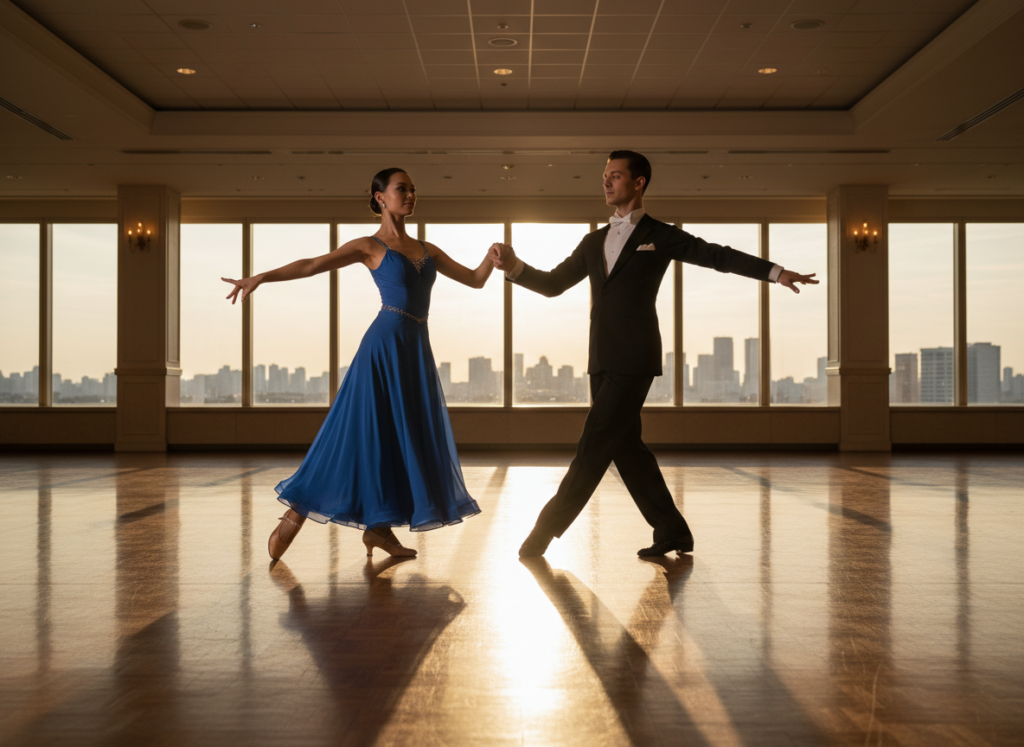
Part 3: Why Walking Is One of the Most Important Skills in Ballroom Dancing
Walking is something most people never question. We walk every day without thinking about how our feet move, how our weight shifts, or how our posture responds to motion. Because it feels so natural, many dancers assume walking in ballroom dancing should also be automatic. In reality, ballroom walking technique is one of the most misunderstood—and most transformative—skills a dancer can develop.
In ballroom dancing, walking is not simply a way to travel across the floor. It is the foundation for nearly every figure, turn, and partnership interaction. Smooth dances like Waltz, Foxtrot, and Tango rely heavily on walking actions, while rhythm and Latin styles still depend on strong walking mechanics for clarity, balance, and timing.
When ballroom walking technique is strong, movement looks effortless and controlled. When it is weak, dancers often feel off-balance, rushed, or disconnected from their partner. Many common problems—heavy steps, inconsistent timing, unstable turns—can be traced back to inefficient walking mechanics.
This is why studios and instructors place so much emphasis on walking exercises, even for experienced dancers. Walking reveals how well a dancer understands weight transfer, posture, alignment, and floor interaction. It is simple, but it is never trivial.
How Ballroom Walking Differs from Everyday Walking
Everyday walking prioritizes efficiency and speed. Ballroom walking prioritizes control, clarity, and communication. While the basic action of moving one foot in front of the other remains the same, the intention behind that movement changes significantly.
In ballroom dancing, walking must:
- Maintain upright posture
- Clearly transfer weight from foot to foot
- Preserve balance without tension
- Communicate direction and timing to a partner
Unlike casual walking, ballroom walking requires the dancer to be fully aware of where their weight is at all times. Each step must be completed before the next begins. This clarity allows the dancer to stop, change direction, or turn at any moment without losing balance.
Many dancers struggle early on because they try to move too quickly. Slowing down reveals habits such as leaning, incomplete weight transfer, or collapsing posture. Once these habits are addressed, walking becomes smoother and more confident.
Posture as the Starting Point for Ballroom Walking
Good ballroom walking technique begins before the feet ever move. Posture determines how weight travels through the body and into the floor. Without proper posture, even well-placed steps will feel unstable.
In ballroom dancing, posture is lifted but relaxed. The head floats over the spine, the chest feels open without being rigid, and the hips remain neutral. This alignment allows the body to move as a coordinated unit rather than as disconnected parts.
Poor posture often leads to walking problems. Leaning forward causes rushing. Leaning back creates hesitation. Collapsed posture reduces balance and makes steps feel heavy. Correct posture allows walking to feel controlled without strain.
Developing awareness of posture while walking is one of the most effective ways to improve overall technique.
Initiating the Step: Placement Before Movement
One of the defining characteristics of ballroom walking is the sequence of movement. In ballroom dancing, the foot places first, and then the body moves over it. This is different from lunging or falling into a step.
For forward walking, the foot reaches forward with intention, maintaining contact with the floor. The body remains centered until the foot is ready to receive weight. Once the foot is placed, weight transfers fully and smoothly.
This sequence creates control. It allows the dancer to adjust step size, timing, or direction without losing balance. It also prevents the upper body from falling ahead of the feet, a common mistake among beginners.
Backward walking follows the same principle. The foot places behind the body, and weight transfers only once the foot is secure. Rushing this process leads to instability and shortened steps.
The Role of the Standing Leg
Every step in ballroom walking depends on the standing leg. The standing leg supports the body while the free leg moves. When dancers neglect the standing leg, steps feel rushed and balance suffers.
Strong ballroom walking technique involves fully committing weight to the standing leg before moving the free foot. This commitment creates stability and allows the free leg to move smoothly and accurately.
Dancers who struggle with walking often discover that they are trying to move both legs at once. Separating the roles of the standing leg and the moving leg brings immediate improvement.
Foot Usage and Floor Contact
Ballroom dancing emphasizes intentional contact with the floor. Walking steps should feel connected rather than lifted or stomped.
In many ballroom styles, forward steps roll through the foot, allowing the heel to lower naturally as weight transfers. Backward steps often use the ball of the foot first, maintaining control and balance.
The exact foot usage varies by dance style, but the underlying principle remains the same: the foot stays connected to the floor, and weight transfers smoothly rather than abruptly.
This connection enhances balance and allows dancers to feel grounded, even during longer traveling movements.
Timing and Rhythm in Ballroom Walking
Walking in ballroom dancing is inseparable from music. Each step must align with the rhythm and timing of the dance. Rushed steps feel disconnected from the music, while delayed steps feel heavy.
Clear weight transfer supports musical timing. When dancers complete each step fully, they naturally arrive on time. When weight transfer is incomplete, dancers often rush to compensate.
Practicing walking slowly to music helps dancers internalize timing and develop patience. Over time, speed can increase without sacrificing clarity.
Forward Walking Technique in Ballroom Dancing
Forward walking requires confidence and control. The body remains upright as the foot reaches forward. Weight transfers only after placement, allowing the dancer to remain balanced throughout the step.
A common error is overstriding, which pulls the body forward and disrupts posture. Controlled steps that maintain alignment create smoother, more elegant movement.
When forward walking technique improves, dancers often notice better balance and more consistent timing across all dances.
Backward Walking Technique in Ballroom Dancing
Backward walking demands trust and awareness. The dancer must rely on balance rather than sight.
Clear backward walking technique involves placing the foot with intention and allowing weight to settle fully. Shortened or rushed backward steps create instability and limit movement options.
Developing confidence in backward walking often transforms a dancer’s overall comfort on the floor, especially in partnered dances.
Side Walking and Transitional Steps
Side steps connect forward and backward movement. They require clear weight transfer and strong posture to maintain balance during directional changes.
Proper side walking technique allows dancers to move laterally without collapsing posture or losing control. This skill becomes increasingly important as choreography becomes more complex.
Walking as Communication in Partnership
In ballroom dancing, walking is a primary means of communication between partners. Clear steps convey direction, timing, and intention.
When walking technique is strong, leads can guide movement without force. Follows can respond confidently because the information being sent is clear.
Poor walking technique often leads to compensations in the upper body. Improving walking frequently improves partnership connection without changing frame or handhold.
Common Walking Mistakes and How Awareness Fixes Them
Many walking issues stem from habits rather than lack of ability. Leaning, rushing, incomplete weight transfer, and overstriding are all common patterns.
Bringing awareness to walking—especially through slow practice—allows dancers to identify and correct these habits. Small adjustments create noticeable improvements.
Why Studios Emphasize Walking Exercises
Ballroom dance studios often return to walking exercises because they reveal everything. Walking shows posture, balance, timing, weight transfer, and partnership quality all at once.
By refining walking technique, dancers improve every other aspect of ballroom dancing more efficiently than by focusing on isolated figures.
The Role of Proper Footwear in Ballroom Walking
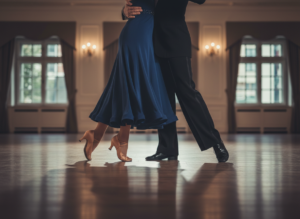
Ballroom walking technique is strongly supported by appropriate footwear. Dance shoes allow the foot to articulate naturally and provide controlled traction.
Shoes designed for ballroom dancing help dancers feel the floor and commit weight with confidence. This support makes technique work more effective and comfortable.
Many dancers notice immediate improvements in walking quality when wearing proper dance shoes during practice.
Walking as a Lifelong Technical Focus
Even advanced dancers continue refining their walking technique. As awareness increases, movement becomes more subtle and expressive.
Walking never stops being relevant. It remains the foundation upon which all ballroom dancing is built.
Conclusion: Mastering Ballroom Dancing One Step at a Time
Ballroom walking technique transforms everyday movement into something intentional, elegant, and expressive. It supports balance, timing, partnership, and confidence on the dance floor.
By focusing on posture, weight transfer, foot placement, and musical timing, dancers build a foundation that supports every style and level of ballroom dancing. With proper instruction and supportive footwear, walking becomes not just a way to move—but a way to dance.