Part 4: Creating Smoothness, Control, and Connection
Why Foot Articulation Is One of the Most Overlooked Skills in Ballroom Dancing
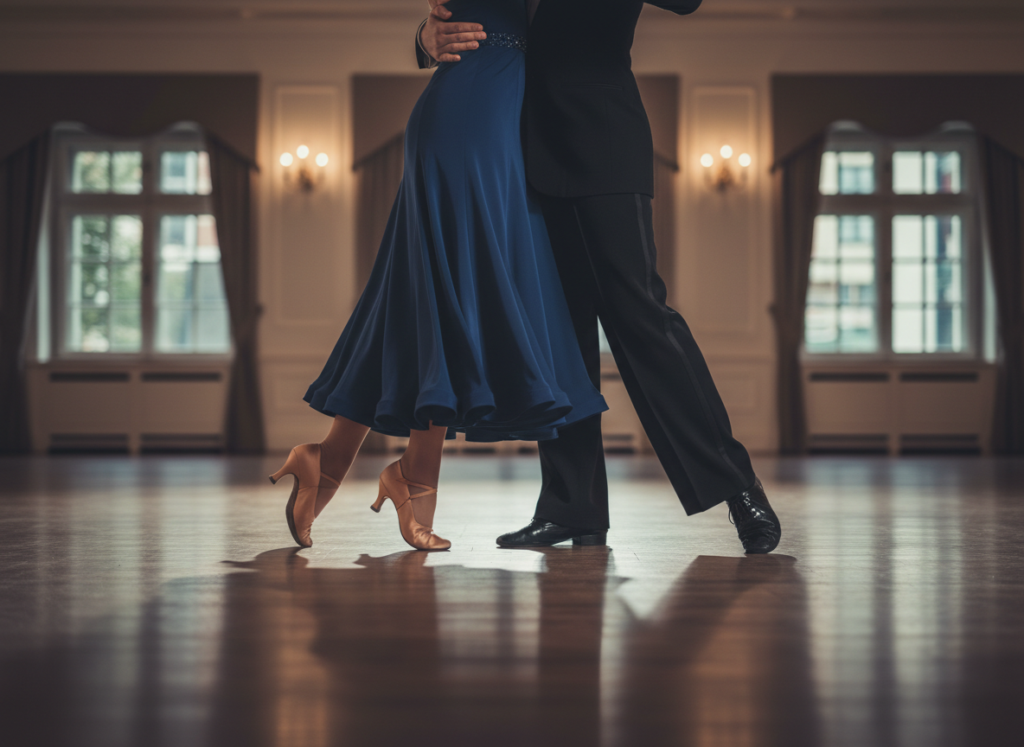
In ballroom dancing, audiences often notice posture, costumes, and dramatic turns before they ever notice what the feet are doing. Yet beneath every elegant movement is a constant conversation between the dancer’s feet and the floor. This conversation—known as foot articulation and floor contact—is what gives ballroom dancing its smoothness, clarity, and grounded quality.
Many dancers assume that footwork simply “happens” as long as they step in the right direction. In reality, how the foot meets, moves across, and leaves the floor determines the quality of the entire dance. Poor foot articulation leads to heavy steps, loss of balance, and inconsistent timing. Clear articulation allows movement to feel effortless and controlled.
Foot articulation is not about exaggeration or decoration. It is about efficiency. When the foot works correctly, weight transfer becomes easier, posture remains stable, and movement flows naturally from one step to the next. This is why instructors frequently return to basic footwork exercises, even with advanced dancers.
Understanding foot articulation and floor contact deepens a dancer’s relationship with the floor and unlocks a new level of control in ballroom dancing.
What Foot Articulation Means in Ballroom Dancing
Foot articulation refers to how the foot moves through its full range of motion as it interacts with the floor. This includes how the foot receives weight, supports the body, and releases weight into the next step.
In ballroom dancing, the foot is rarely static. Even when it appears still, subtle adjustments are taking place to maintain balance and alignment. Clear articulation allows the dancer to use the foot as a responsive tool rather than a rigid platform.
Floor contact refers to the quality of connection between the foot and the floor. Rather than stepping on top of the floor, ballroom dancers move through it, maintaining awareness and control at all times.
Together, foot articulation and floor contact create movement that looks smooth, feels grounded, and responds easily to changes in direction or timing.
Why the Floor Matters More Than Dancers Realize
The floor is not just a surface—it is a partner. Every step sends information into the floor, and the floor sends feedback back into the body. Dancers who learn to listen to that feedback move with greater confidence and accuracy.
When foot contact is inconsistent, dancers feel disconnected. Steps feel noisy, balance feels uncertain, and movement becomes inefficient. Clear floor contact provides stability without stiffness, allowing dancers to move freely while staying grounded.
This relationship with the floor becomes especially important in social and competitive ballroom dancing, where floor conditions can vary. Dancers who rely on strong foot articulation adapt more easily to different surfaces.
How Foot Articulation Supports Weight Transfer
Foot articulation and weight transfer are inseparable. Weight transfer cannot be clean if the foot does not articulate properly. Likewise, clear articulation becomes meaningless if weight is not fully committed.
As weight moves from one foot to the other, the supporting foot must organize itself to receive and manage that weight. This organization involves subtle rolling, pressure changes, and engagement that allow the body to remain balanced.
When foot articulation is neglected, dancers often experience delayed or rushed weight transfer. Improving how the foot works often resolves these issues without additional effort.
Forward Foot Articulation in Ballroom Dancing
Forward movement is where many dancers first encounter articulation challenges. Rather than placing the foot flat or stiff, ballroom dancing encourages a smooth, controlled action that allows weight to travel naturally.
In many ballroom styles, forward steps involve allowing the foot to make contact with the floor and then gradually accepting weight. This gradual acceptance supports balance and prevents jarring movement.
Forward articulation also affects posture. When the foot rolls naturally, the body remains upright and centered. When the foot is stiff or slaps the floor, posture often collapses forward.
Backward Foot Articulation and Control
Backward steps require a different kind of awareness. Because the dancer cannot see where the foot is going, tactile feedback becomes essential.
Clear backward foot articulation allows the dancer to feel the floor before committing weight. This sensation builds trust and reduces hesitation. When dancers rush backward steps without feeling the floor, balance becomes unreliable.
Over time, strong backward articulation creates confidence and consistency, even in unfamiliar space.
Side Foot Articulation and Stability
Side steps often reveal whether foot articulation is working efficiently. Without proper articulation, side movement feels abrupt or incomplete.
Clear side articulation allows the foot to support lateral movement while maintaining posture and balance. This skill becomes increasingly important as dancers progress into more complex figures that involve direction changes.
Foot Pressure and Balance
Foot articulation is closely tied to pressure management. The dancer must distribute pressure intelligently across the foot rather than gripping or collapsing.
Too much pressure creates stiffness and fatigue. Too little pressure results in instability. Balanced pressure allows the foot to respond dynamically to movement.
Learning to feel pressure changes through the foot helps dancers refine balance and control across all styles of ballroom dancing.
Articulation During Transitions Between Steps
Transitions between steps are where articulation truly matters. Smooth transitions depend on the foot releasing weight cleanly and preparing for the next movement.
When transitions are rushed, articulation becomes sloppy. When transitions are intentional, movement appears continuous and fluid.
This is why experienced dancers often appear to “glide” across the floor. Their feet articulate cleanly at every moment, even between steps.
Foot Articulation and Musicality
Footwork plays a subtle but powerful role in musicality. Clear articulation allows dancers to express rhythm through their movement.
When feet connect cleanly with the floor, timing becomes precise. When articulation is inconsistent, musical interpretation suffers.
Developing articulation enhances not only technique but also expression.
Common Footwork Issues and Their Causes
Many common ballroom issues stem from poor articulation:
- Heavy or noisy steps
- Loss of balance
- Rushed timing
- Difficulty turning or stopping
These problems are rarely about lack of talent. They are usually about awareness. Bringing attention to how the foot interacts with the floor often resolves them.
Why Studios Focus on Footwork Fundamentals
Studios emphasize foot articulation because it affects everything else. Rather than layering complexity on top of weak foundations, instructors refine footwork to support long-term progress.
This approach leads to smoother movement, better balance, and greater confidence.
The Role of Proper Footwear in Foot Articulation
Foot articulation is heavily influenced by footwear. Ballroom dance shoes are designed to support natural foot movement while maintaining appropriate traction.
Suede soles allow the foot to articulate without sticking, while flexible construction supports rolling through the foot. Proper fit ensures that the foot can respond accurately to the floor.
Dancers who switch from everyday shoes to ballroom shoes often notice immediate improvement in articulation and comfort.
Practicing Foot Articulation Effectively
Effective practice involves slowing down and paying attention. Simple walking exercises, balance drills, and pauses between steps help dancers feel how the foot works.
These practices may seem basic, but they build the foundation for advanced technique.
Foot Articulation as a Long-Term Skill
Foot articulation continues to develop throughout a dancer’s journey. As awareness increases, movement becomes more refined and expressive.
Dancers who invest in footwork early often progress more efficiently and enjoy ballroom dancing with less strain.
Conclusion: Connecting to the Floor Through Foot Articulation
Foot articulation and floor contact are the quiet forces behind smooth, confident ballroom dancing. They support balance, weight transfer, musicality, and partnership.
By learning to move through the floor with intention and awareness, dancers create movement that feels grounded and looks effortless. Supported by proper instruction and appropriate footwear, strong foot articulation allows ballroom dancing to unfold naturally, step by step.